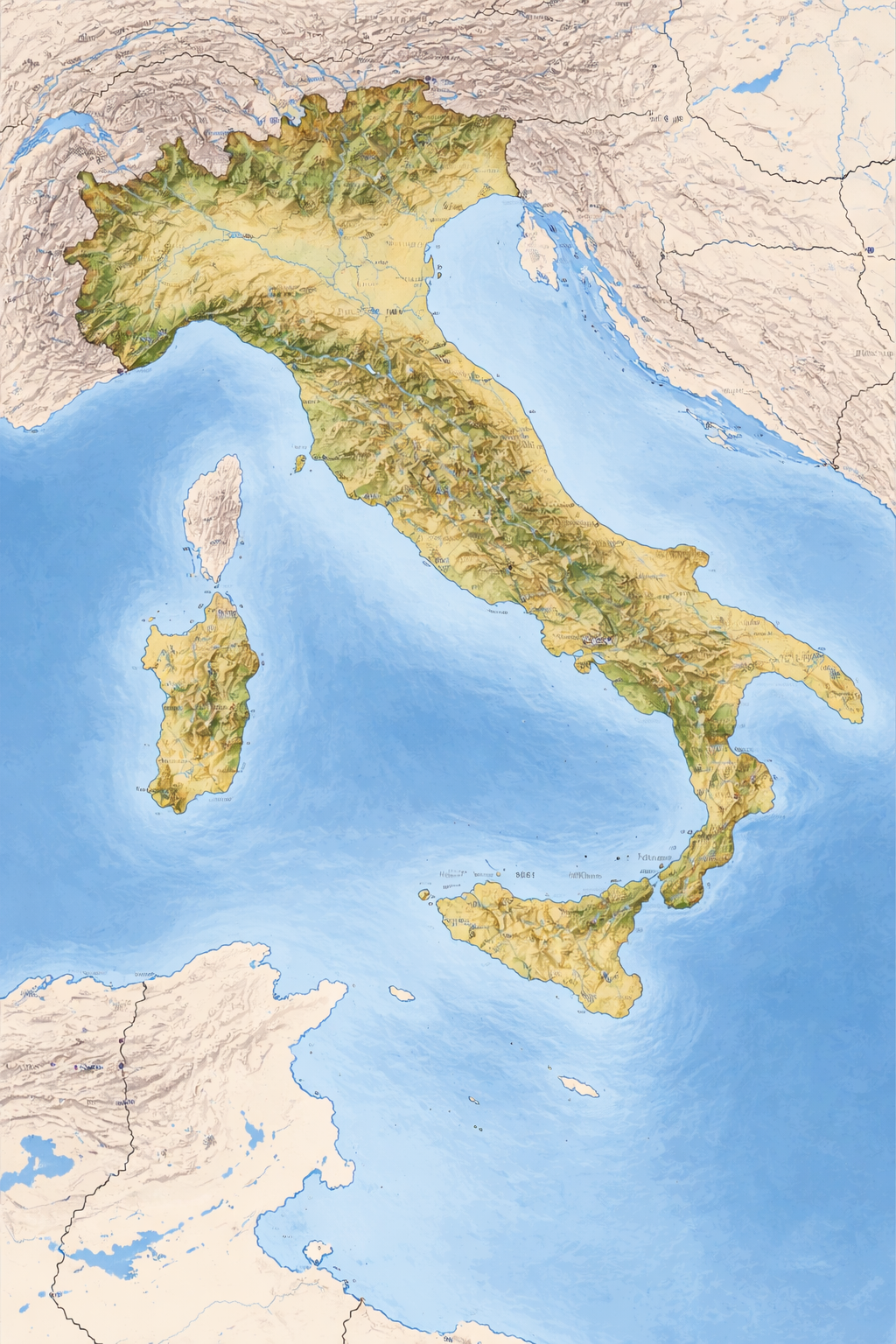
Italy is famous worldwide for its unmistakable boot-shaped peninsula, its art cities, extraordinary cuisine, and breathtaking landscapes. Beyond its beauty, Italy is an incredibly diverse country, where geography, climate, and culture vary greatly from one region to another.
In this article, we want to help you discover how Italy is structured: from North to South, from mountains to islands, so you can understand which part of the country best matches your travel style and passions. Personally, I have visited many Italian regions and find it fascinating how the landscape and climate change from one area to another, along with the history, food, and activities unique to each place.
Northern Italy: mountains, lakes, and great plains
Northern Italy is one of the most geographically diverse areas of the country. Here, the Alps and the Dolomites rise majestically, offering alpine panoramas, ski resorts, and unique natural landscapes. Next to the mountains stretches the Po Valley, one of the largest and most fertile plains in Europe. Northern Italy is also home to some of the country’s most famous and picturesque lakes, such as Lake Garda (the largest in Italy) and Lake Como, renowned for its elegant scenery and historic villas.
The climate is generally continental: cold winters, often snowy in the mountains, and hot, humid summers in the plains. Along the Ligurian coast and in lake areas, the climate is milder.
Regions of Northern Italy: Valle d’Aosta, Piedmont, Lombardy, Trentino-Alto Adige / Südtirol, Veneto, Friuli Venezia Giulia, Liguria, and Emilia-Romagna.
Did you know…?
This area is also home to Valle d’Aosta, Italy’s smallest region, nestled between France and Switzerland. Despite its small size, it boasts some of the highest peaks in the Alps, including Mont Blanc, and offers breathtaking landscapes dotted with medieval castles and green valleys.
Central Italy: hills, the Apennines, and art cities
Central Italy represents the historical and cultural heart of the country. Rome, the capital, is one of the most fascinating cities in the world, where ancient history, art, and contemporary life coexist in a unique way. Beyond Rome, Central Italy is famous for its art cities, medieval villages, and rolling hills that make regions like Tuscany and Umbria so renowned. Florence, Siena, Pisa, Perugia, and Assisi are just a few examples of places where cultural and artistic heritage blends harmoniously with nature.
The Apennine mountain range crosses this part of the country like a backbone, creating a perfect balance between mountains, hills, and coasts. The climate is generally mild, with moderate winters and warm summers, often softened by sea breezes and the presence of hills.
Regions of Central Italy: Tuscany, Umbria, Marche, Lazio, Abruzzo, and Molise.
Did you know…?
Tuscany has the highest number of hills in Italy, covering about 60% of its territory. Here, you can admire incredible views of gentle hills dotted with vineyards and olive groves, and it’s no coincidence that some scenes from the movie ‘300’ were filmed among these evocative landscapes.
Southern Italy: sea, volcanoes, and the Mediterranean soul
Southern Italy is synonymous with energy, deep-rooted traditions, and Mediterranean landscapes. Life here moves at a slower pace, the sea takes center stage, and local customs remain strongly preserved. Naples, located in Campania, is one of the iconic cities of Southern Italy: a vibrant metropolis dominated by Mount Vesuvius and overlooking the Gulf of Naples, famous for its history, pizza, and authentic character.
The South is also known for its crystal-clear waters and breathtaking beaches. One of the most famous areas is Salento, in Puglia, often called “the Caribbean of Italy” due to its turquoise colors and spectacular coastal scenery. The climate in Southern Italy is typically Mediterranean: mild winters and long, hot, sunny summers, perfect for those who love the sea and outdoor life.
Regions of Southern Italy: Campania, Puglia, Basilicata, and Calabria.
Did you know…?
Mount Vesuvius, the famous volcano near Naples, is the only active volcano in continental Europe located so close to a major city. Its last documented eruption occurred in 1944 during World War II, and it has since remained mostly dormant, with only fumarolic activity and low seismicity. Its most famous eruption, in 79 AD, buried cities such as Pompeii and Herculaneum under ash and pumice, preserving them almost intact for us to see today.
The Islands: Sicily, Sardinia, and beyond
In addition to the mainland, Italy includes numerous islands. The two largest are Sicily and Sardinia, both with strong identities and unique landscapes. Sicily is the largest region in Italy and one of the most fascinating islands in the Mediterranean, famous for Mount Etna, archaeological sites, and Baroque cities.
Sardinia, located southwest of the Italian peninsula, is known for its spectacular beaches, wild nature, and an ancient, authentic culture. The islands enjoy a Mediterranean climate, with mild winters and warm, breezy summers, making them ideal to visit year-round.
Besides these two, Italy offers many other charming islands such as Elba, Capri, Ischia, the Aeolian Islands, Favignana, and Pantelleria.
Did you know…?
Sicily is home to Mount Etna, the highest active volcano in Europe, standing over 3,300 meters tall, while Sardinia preserves mysterious megalithic towers called nuraghi, built during the Bronze Age and numbering over 7,000 across the island.
Curiosities about Italy
Did you know that five Italian regions have special statutes?
Italy is made up of 20 regions, each with its own historical and cultural identity. Five regions enjoy a special statute that grants them a higher degree of administrative and legislative autonomy compared to the others. This status is due to historical, geographic, and linguistic reasons, such as the presence of linguistic minorities or particular territorial conditions.
Regions with special statutes: Valle d’Aosta, Trentino-Alto Adige / Südtirol, Friuli Venezia Giulia, Sicily, and Sardinia.
Did you know that there are two independent states within Italy?
Vatican City: the smallest country in the world, located in the heart of Rome. It is the center of the Catholic Church and home to some of the most important artistic and cultural treasures in the world.
San Marino: one of the oldest sovereign states in the world, located between Emilia-Romagna and Marche on Mount Titano. With its millennia-old history and medieval city center, San Marino is a unique place in the European landscape.
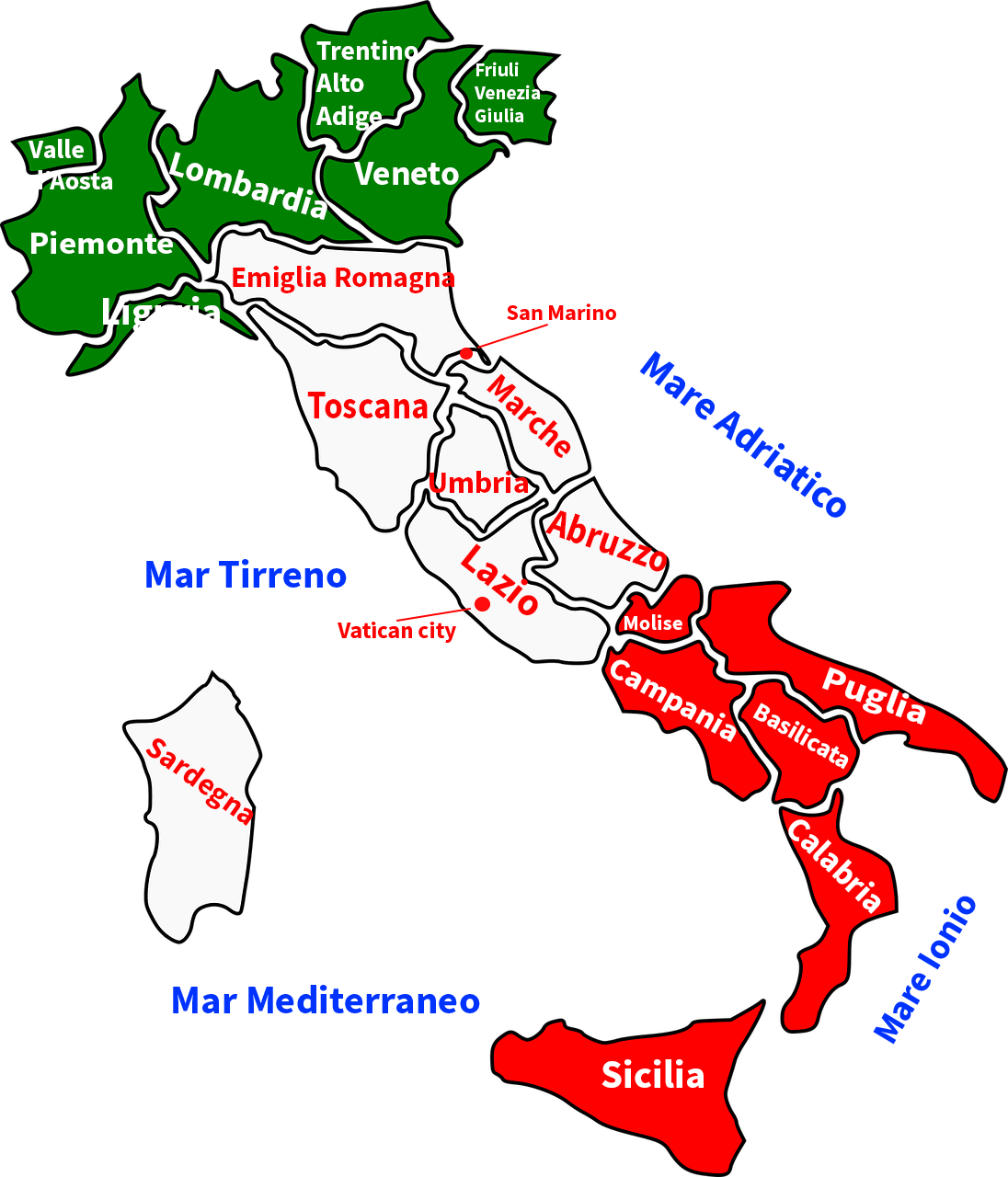
Italy: a complete overview
Discover Italy’s 20 regions, the two independent states (Vatican City and San Marino) and the seas surrounding the Boot. A clear overview to help you get oriented and prepare for your trip to Italy.
Italy is a country of countless facets: from the Alpine mountains to the Mediterranean coasts, from art cities to islands, each region tells a different story. Understanding how Italy is structured is the first step in choosing the destination that best suits your travel style.
If you want to discover Italy in an authentic and personalized way, Dolce Italy Escape can help you create a tailored itinerary, designed to let you experience the best of the country according to your dreams and passions. For more information or to start planning your experience, write to dolceitalyescape@gmail.com.
